



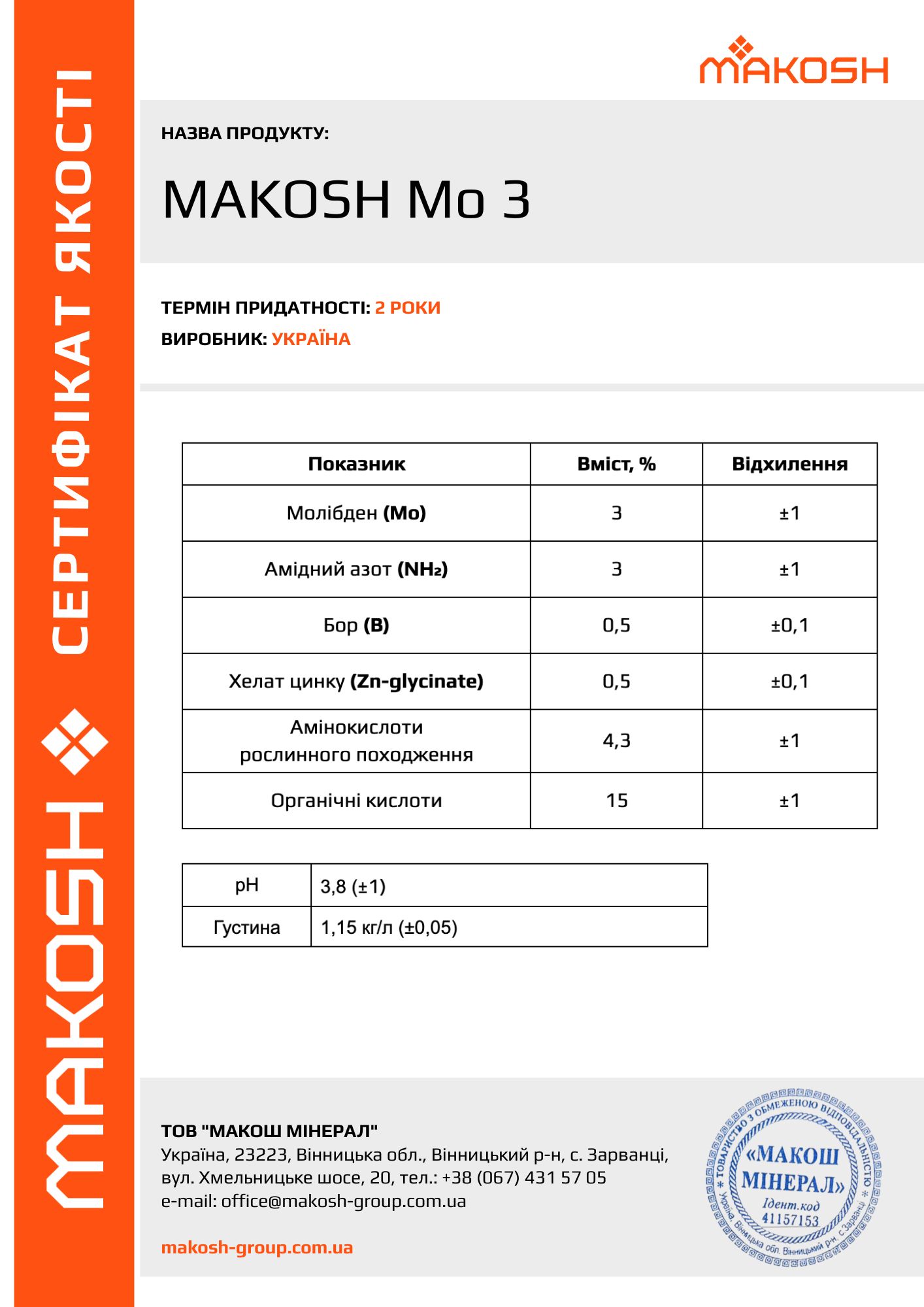
- 1,15 kg/l Density
Contains phytohormones, polysaccharides and adhesive
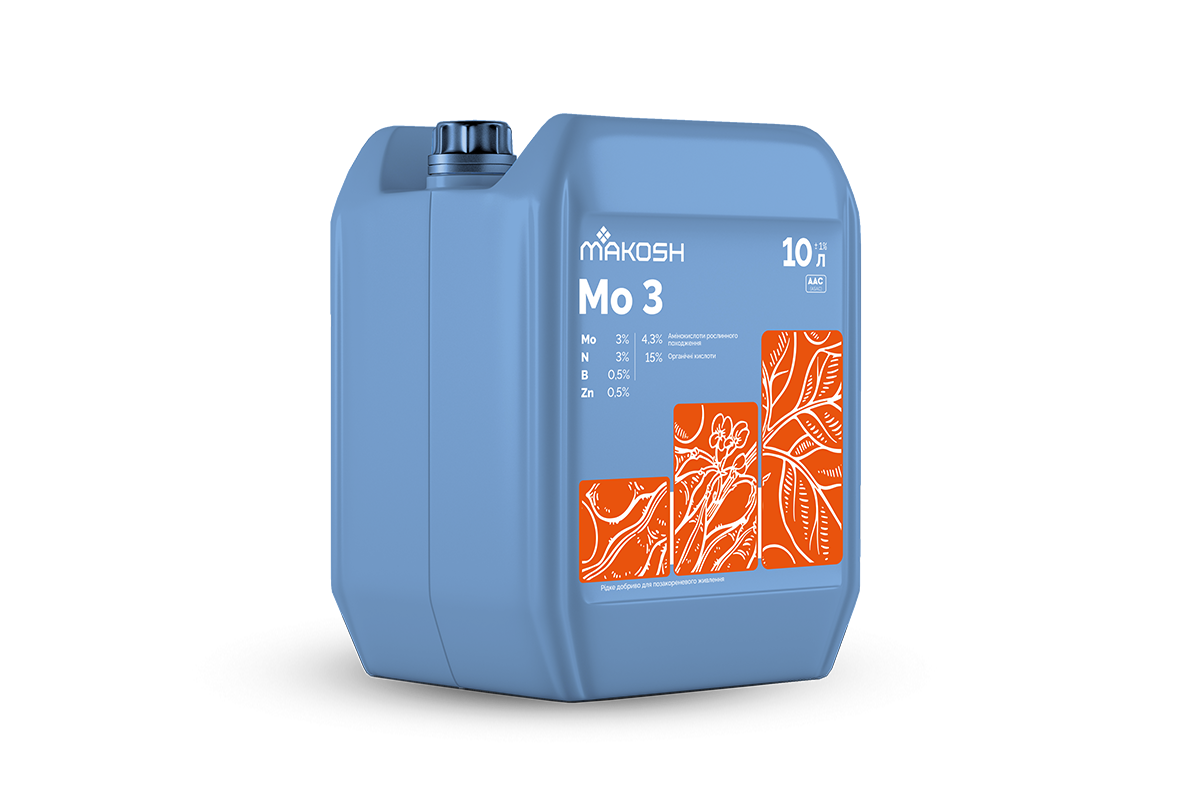
MAKOSH Mo 3
MAKOSH Mo 3
Producer
- UKRAINE
Composition
Application
Delivery
- 3%Molybdenum (Mo)
- 3%Nitrogen (N)
- 0,5%Bor (B)
- 0,5%Zinc chelate (Zn)
- 4,3%Amino acids of plant origin
- 15%Organic acids
- Foliar feeding, fertilization
- Shipping costs are calculated individually depending on volume and region
Dosage
| Crops | Fertilizer Application Rates and Phase | Fertilizer Application Rates and Phase | Fertilizer Application Rates and Phases |
| Winter and spring rape | Leaf Rosette Formation 0,3-0,6 l/ha | Stem Formation 0,3-0,6 l/ha | Bud formation 0,3-0,6 l/ha |
| Sugar beet | Row Closure 0,3-0,6 l/ha | Row Closure 0,3-0,6 l/ha | Root formation 0,3-0,6 l/ha |
| Sunflower | 4-6 Leaves 0,2-0,5 l/ha | 8 or More Leaves 0,2-0,5 l/ha | Star stage 0,2-0,5 l/ha |
| Corn | 4-6 Leaves 0,2-0,5 l/ha | 8 or More Leaves 0,2-0,5 l/ha | |
| Soybeans, peas | 3 or More True Leaves 0,5-0,8 l/ha | Bud Formation 0,2-0,5 l/ha | Bean formation 0,2-0,5 l/ha |
| Potatoes | Row Closure 0,3-0,6 l/ha | Row Closure 0,3-0,6 l/ha | Tuber growth and development 0,3-0,6 l/ha |
| Vegetables | 2-3 Weeks After Transplanting 0,2-0,5 l/ha | 10-14 Days After First Fertilization 0,2-0,5 l/ha | Every 10-14 days 0,2-0,5 l/ha |
| Winter and spring grains | Tillering 0,2-0,5 l/ha | Tubing 0,2-0,5 l/ha | Flag leaf 0,2-0,5 l/ha |
| Fruits and berries | Bud Formation 0,2-0,5 l/ha | Fruit Ovary Formation/Fruit Filling 0,2-0,5 l/ha | Fruit ripening 0,2-0,5 l/ha |
MAKOSH
MAKOSH
MAKOSH
MAKOSH
MAKOSH
MAKOSH

Would you like to order a product?
Properties
- Stimulates the activity of nodule bacteria and nitrogen uptake. Activates symbiotic processes, promoting better root growth and efficient nitrogen absorption from the soil.
- Increases plant resistance to low temperatures and moisture deficit. Strengthens the defense mechanisms of plants, helping them to withstand stressful conditions, including frost and drought.
- Optimizes the exchange of key elements – nitrogen, phosphorus and sulfur. Regulates nutrition processes, promoting the accumulation of proteins, which is especially important for legumes.
Featured Products

Last viewed